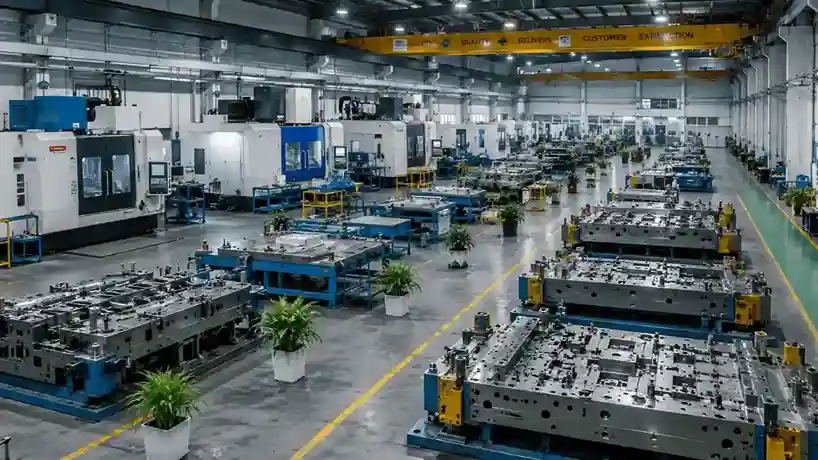
Many automotive suppliers believe that showcasing machines, production capacity, certifications, and product samples is enough to impress an OEM. That is only one part of the story.
OEMs are not merely looking for vendors who can manufacture components. They are looking for long-term partners who can understand their requirements, maintain quality standards, meet timelines, solve problems, and support their business growth consistently over the years.
In the automotive industry, a small mistake can impact an entire production line. Delays, quality issues, or supply disruptions can have significant consequences. This is why OEMs evaluate suppliers not only on what they manufacture, but also on how they operate.
A supplier presentation should never sound like:
“We have machines. We have capacity. We have certifications.”
Instead, it should communicate:
“We have the systems, people, processes, and commitment required to deliver consistently and responsibly.”
The first step is toestablish capability. OEMs must clearly understand the supplier’s manufacturing infrastructure, engineering expertise, tooling support, testing facilities, quality systems, and production capacity.
However, capability should always be linked to customer benefit.
For example:
- Modern machinery means better precision and consistency.
- Strong quality systems mean lower risk.
- Experienced engineers mean faster development cycles.
- Advanced testing facilities mean greater reliability.
OEMs are interested in outcomes, not just equipment lists. Equally important is demonstrating process maturity.
Most OEM teams want to understand how work flows through the organization – from enquiry and development to production and dispatch. A supplier should clearly explain its workflow, including design support, prototyping, tooling, production planning, manufacturing, inspection, packaging, and delivery.
A structured process assures OEMs that results are driven by systems rather than individual efforts.
Quality deserves special attention.
While certifications such as IATF, ISO, and various customer approvals are important, OEMs look beyond certificates. They want evidence that quality is deeply embedded in the company’s culture.
Topics such as traceability, preventive quality systems, root-cause analysis, corrective actions, continuous improvement initiatives, employee training, and customer feedback mechanisms help build confidence.
Similarly, delivery performance must be highlighted.
Automotive manufacturing operates on strict schedules. Suppliers should demonstrate how they manage planning, inventory, logistics, production scheduling, and urgent customer requirements. Consistent on-time delivery reflects discipline, planning, and reliability.
Trust is also built through transparency.
OEMs appreciate suppliers who communicate honestly about capabilities, timelines, challenges, and risks. No manufacturing operation is perfect. What matters is the ability to identify issues early and address them systematically.
A transparent supplier is often viewed as a dependable partner.
People are another critical part of the story.
Behind every component, assembly, and process is a team of engineers, operators, supervisors, quality professionals, and managers. Highlighting the experience, training, stability, and expertise of the workforce gives OEMs confidence in the organization’s long-term capability.
The presentation should also showcase innovation, but in a practical manner.
Rather than talking about technology for the sake of technology, explain how automation, digital systems, process monitoring, and modern manufacturing practices improve precision, traceability, efficiency, and customer satisfaction.
Finally, sustainability and safety are becoming increasingly important.
OEMs prefer suppliers who demonstrate responsible manufacturing practices. Initiatives related to energy conservation, waste reduction, resource optimization, workplace safety, and environmental responsibility should be presented wherever applicable.
At the end of the day, OEMs may forget the exact number of machines installed in a plant, but they will remember how confident they felt about the supplier’s ability to deliver.
The most successful automotive suppliers are not those who merely showcase their infrastructure. They are the ones who successfully communicate their processes, culture, quality mindset, reliability, and commitment to partnership.
Because in the automotive industry, OEMs are not simply buying parts.
They are investing in trust.